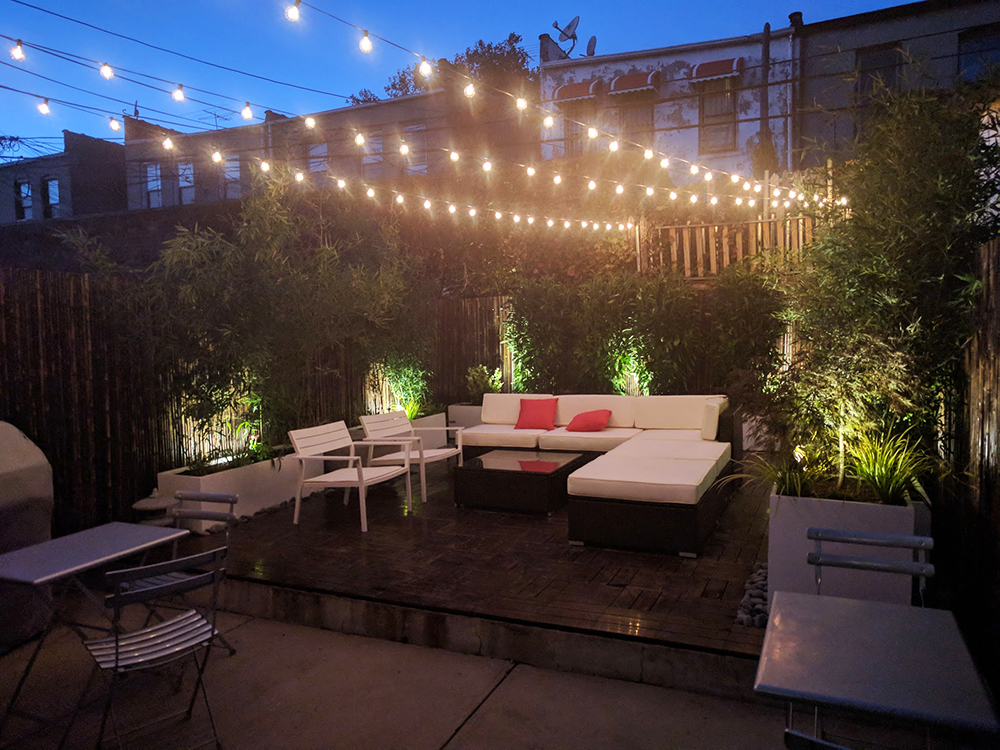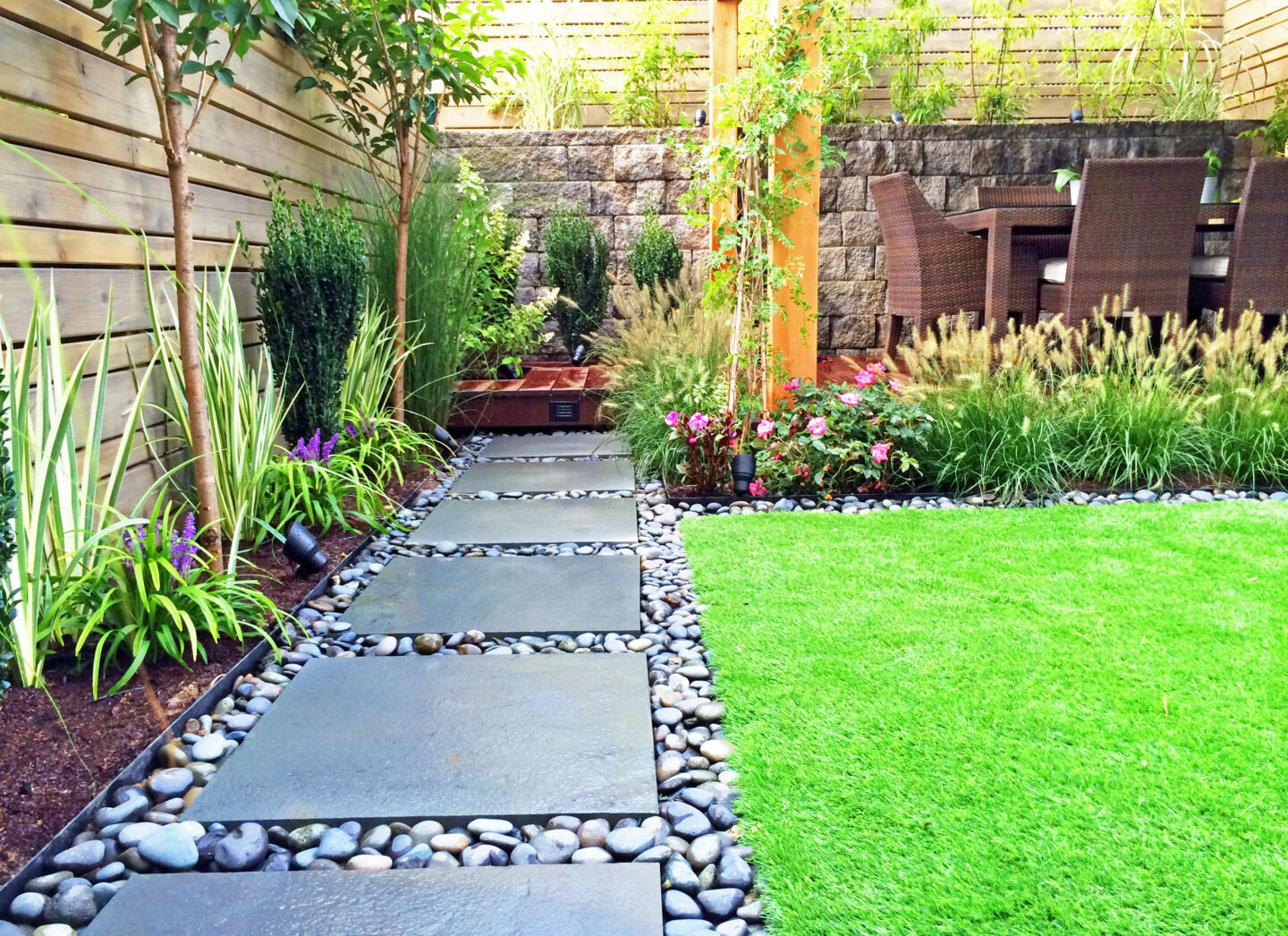

I’ve been designing rooftop gardens in New York City for years, from small Brooklyn brownstone roofs to wrap-around penthouse terraces in Manhattan. The question I hear most at a first consultation is “Where do we even start?” A roof isn’t a backyard. It’s windy, it’s hot, everything has to be carried up, and the building usually has a say. Here’s the order I work in, so you know what to expect before you plant a single thing.
Planning a rooftop garden in New York City? I design and install rooftop gardens across Manhattan, Brooklyn and Queens, from planters and plantings to pergolas, irrigation and lighting. Request a consultation or call (646) 546-1592.
Step 1: Decide What You Want the Roof to Do
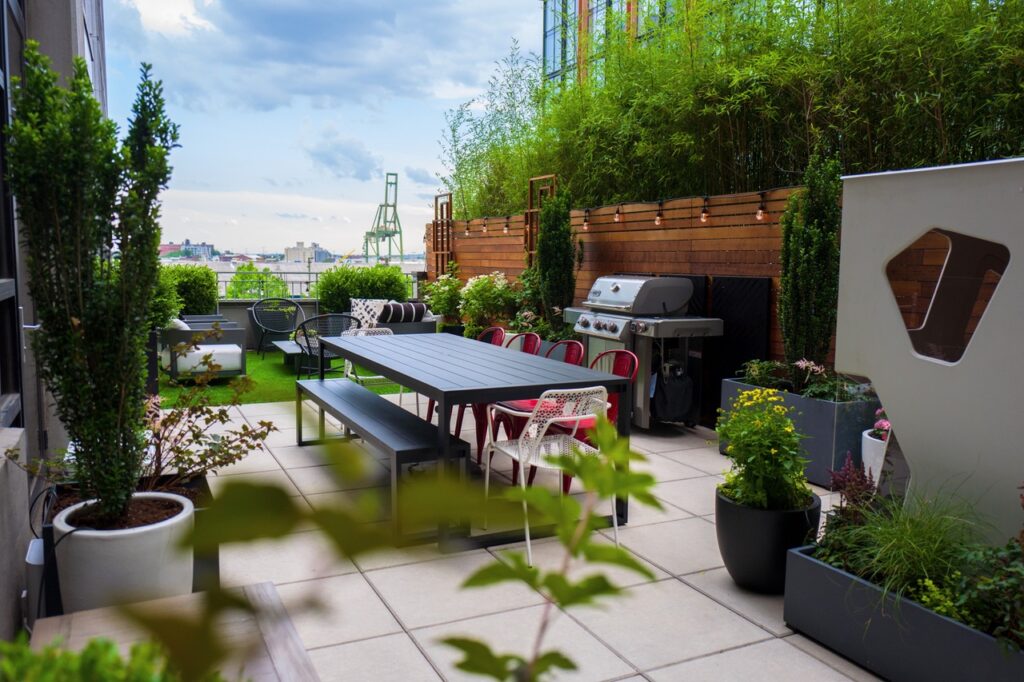
Before we talk plants, I ask how you’ll actually use the space. Morning coffee for two? Dinner parties? A place for kids to play? A shared roof for a whole building? The answer shapes everything else. On a common roof we designed in Park Slope, the layout had to work for several groups of neighbors at the same time, so we created separate seating areas instead of one big lounge. On a Brooklyn Heights roof, the family wanted room for their kids, so the design included a modern playhouse alongside the plantings.
Timing matters too. Fall and winter are the best time to design. That leaves room for drawings, approvals and ordering, so the garden can go in when spring arrives.
Step 2: Find Out What Your Roof Can Hold
Weight is the first technical question. Wet soil, water, big planters, pavers and people all add up. Many NYC roofs were never built to carry a garden, so for larger projects your building’s engineer or architect should confirm the load capacity before we finalize the plan.
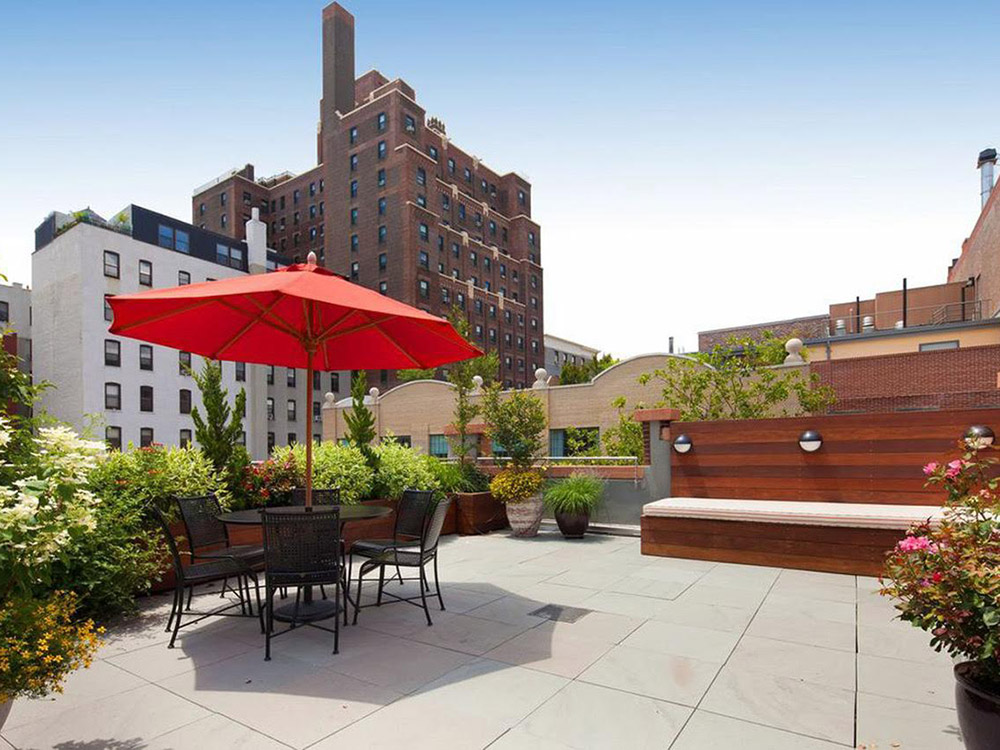
A West Village roof garden I designed, on top of a 6th-floor pre-war building, had a limit of 35 pounds per square foot. We designed around it with lightweight potting soil instead of heavy garden soil and a false bottom inside the large cedar planter to cut down the soil volume. Knowing the number up front meant we could still give the client a lush garden without risking the roof.
Step 3: Check the Building’s Rules and Get Approvals
In most co-ops and condos, rooftop work needs approval from the board or managing agent, and many buildings require an alteration agreement, plan drawings and insurance certificates from everyone who works on site. I provide design plans that are ready to submit. Board reviews can take weeks or even months, which is another reason to start in winter.
Other rules to plan for:
- Fire code. NYC limits how much real wood a roof deck can contain, which is why we used fire-rated composite decking on our award-winning Park Slope roof garden.
- Landmarks. If your building is in a historic district and new elements like a pergola or tall fence would be visible from the street, the Landmarks Preservation Commission may need to review them.
- The roof itself. We protect the roof membrane and keep drains clear, so planters and decking never trap water.
Step 4: Measure, Map the Sun and Wind, and Plan Access
At the site visit I measure the roof and note where the sun falls through the day, where the wind comes from, where the views are (and the views you’d rather hide), and where water and power are available. I also look at how materials will get up there. That West Village building had no elevator, so hundreds of bags of soil, dozens of plants and all the furniture went up the stairs by hand. Access affects the planter sizes we can choose and how the installation day is planned.
Step 5: Choose Planters and Soil

On a roof, the planters are the garden’s foundation. I usually choose from three options:
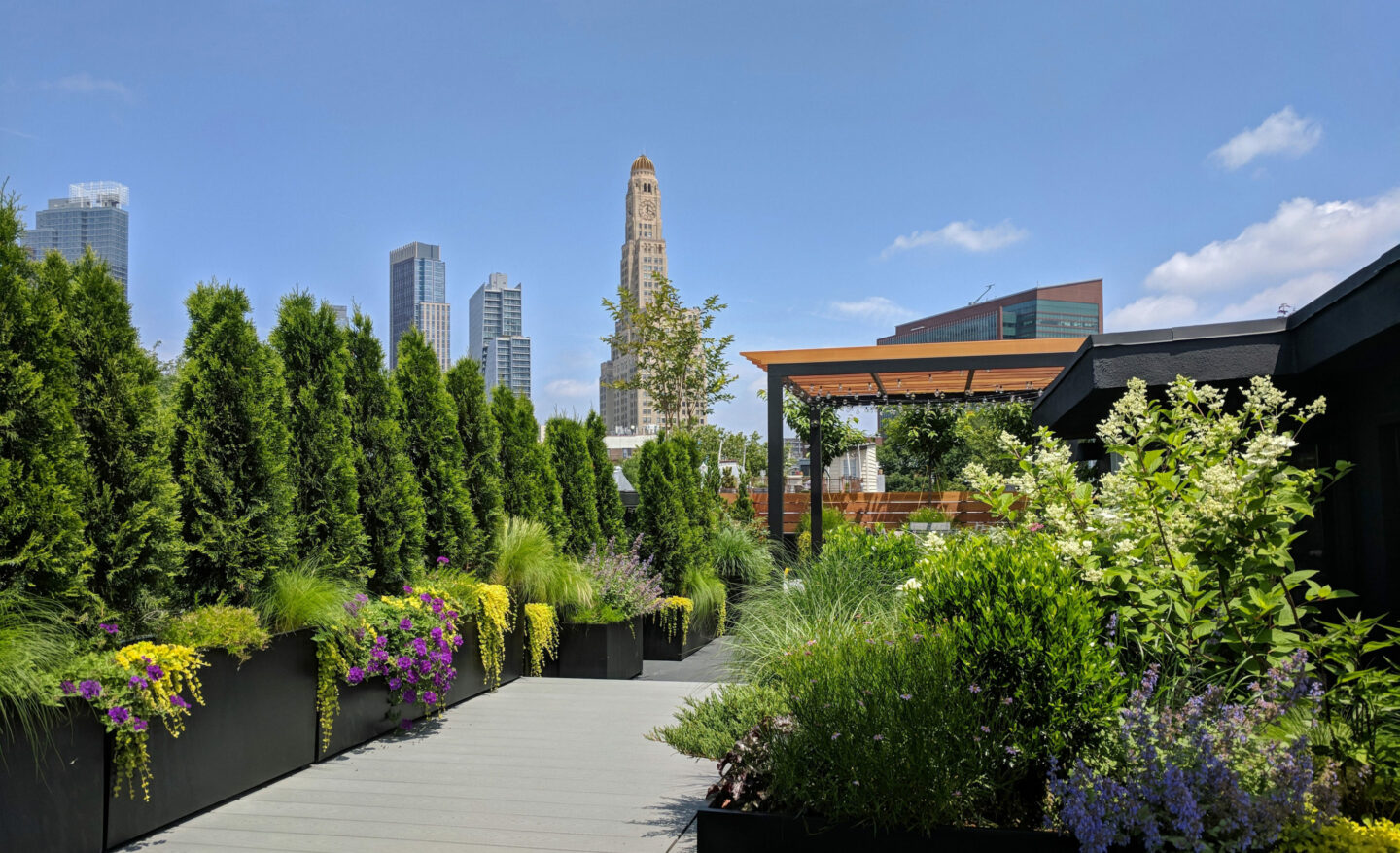
- Lightweight fiberglass planters, like the black fiberglass planters on a Gramercy Park rooftop terrace and a Crown Heights roof deck. They’re light, durable and look clean and modern.
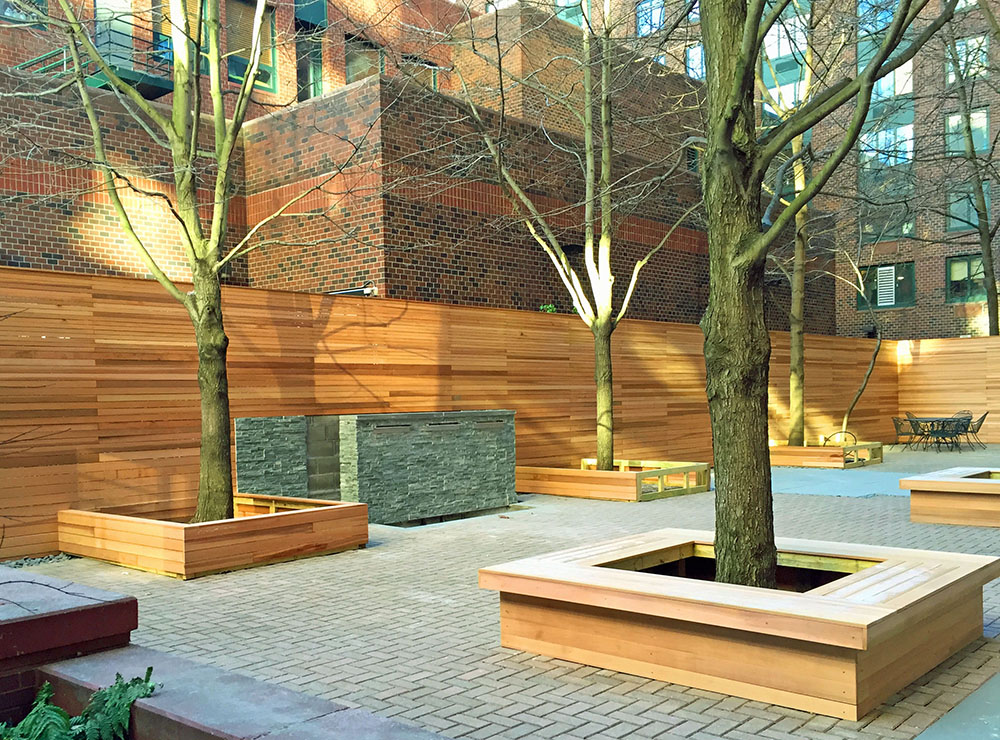
- Custom built-in planters in red cedar or ipe, sized to the space. The West Village roof has a 15′ x 30′ cedar planter, and a Carroll Gardens roof has built-in ipe planters along its seating area.
- Self-watering planters for clients who travel or want less upkeep.
Whatever the planter, it gets lightweight potting mix, never heavy soil from the ground.
Step 6: Pick Plants That Can Take Sun and Wind

NYC rooftops get full sun, strong wind and winter cold, so I choose plants that can take all three. Some that have done well on my roofs:
- Evergreens for structure and privacy: boxwoods, arborvitaes, junipers, Alberta spruces, gold mop cypresses and Steed hollies.
- Small trees: Japanese maples, coral bark maples and multi-stem white birches.
- Flowers and grasses: panicle hydrangeas, catmint, caryopteris, daylilies, maiden grass and gold sweetflag.
- Vines: wisteria on metal arbors (Gramercy Park) and Boston ivy climbing pergola posts (Carroll Gardens).
I mix evergreens with flowering plants so the roof looks good in January, not just in June. For more ideas, see my guide to the best plants for an NYC balcony.
Step 7: Plan Water and Lighting From the Start
Rooftop containers can dry out in a single hot, windy day, so I design drip irrigation on a timer into almost every roof. The lines are hidden in the planters and run to a water source on the roof. Lighting goes in at the same time: low-voltage LED up-lights under trees and grasses, like on the Crown Heights roof deck, plus string lights over seating areas. Running the lines before planting is far easier than adding them later.
Step 8: Add Shade, Privacy and Furniture
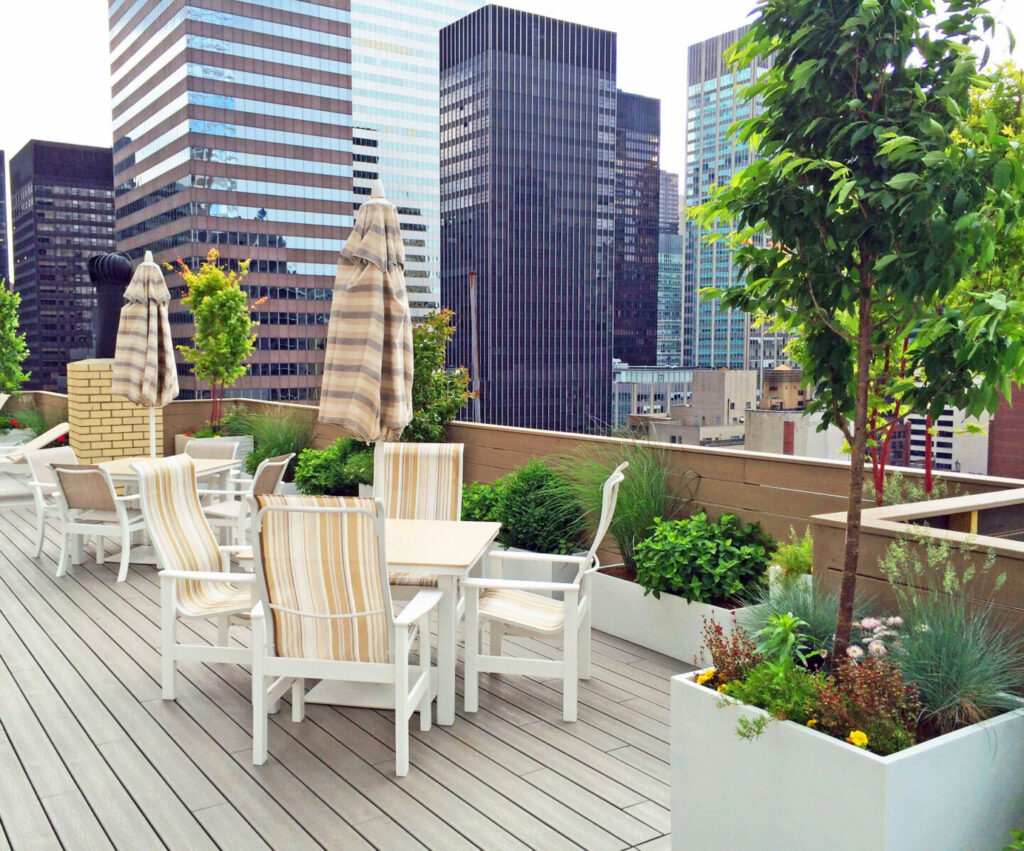
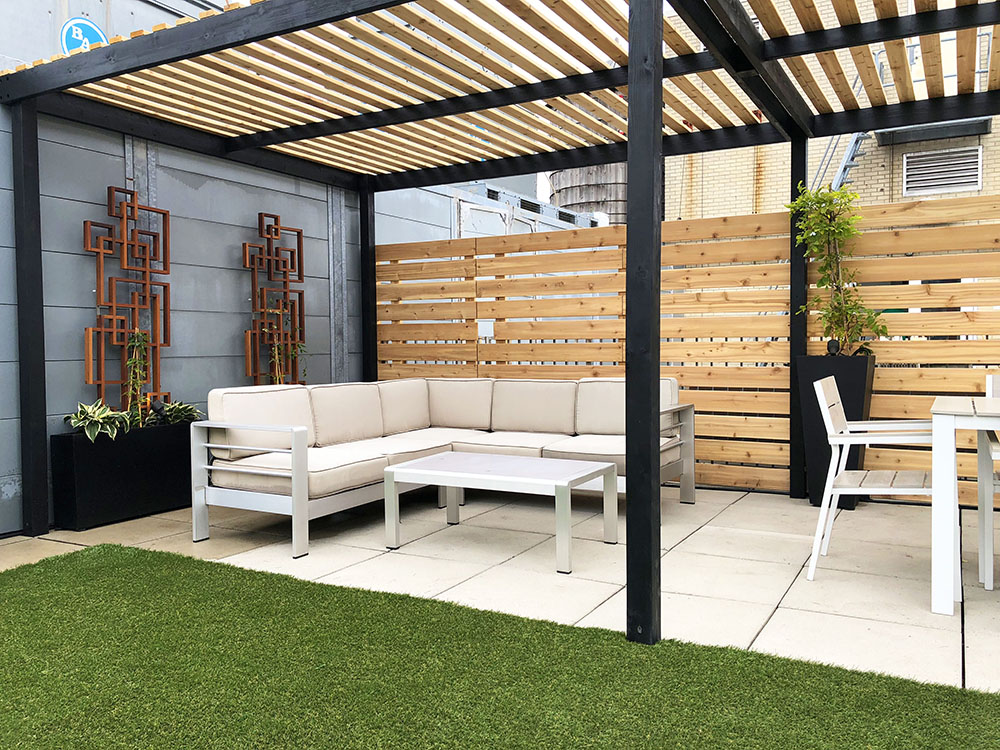
Most NYC roofs have no shade at all. A pergola, an awning, umbrellas or a row of tall planters makes the space usable on summer afternoons. A Williamsburg roof we designed has a custom pergola with a retractable awning, and the Brooklyn Heights roof uses horizontal fencing and custom trellises for privacy. If you’re considering a pergola, read my guide to rooftop pergolas in NYC first. Furniture comes last, chosen to fit the layout and to stand up to the wind.
Step 9: Install in Spring, Then Keep It Healthy
With approvals in hand and materials ordered, installation usually takes days, not weeks. After that, the garden needs care: pruning, feeding, checking the irrigation, and winterizing in the fall, when we drain the irrigation lines and protect the plants before the first freeze. My garden maintenance crews can handle that through the season.
Ready to Plan Your Rooftop Garden?
If you’re thinking about a rooftop garden for next spring, now is the perfect time to start the design. See my rooftop garden design services and rooftop garden portfolio, or request a consultation. You can also call me at (646) 546-1592.