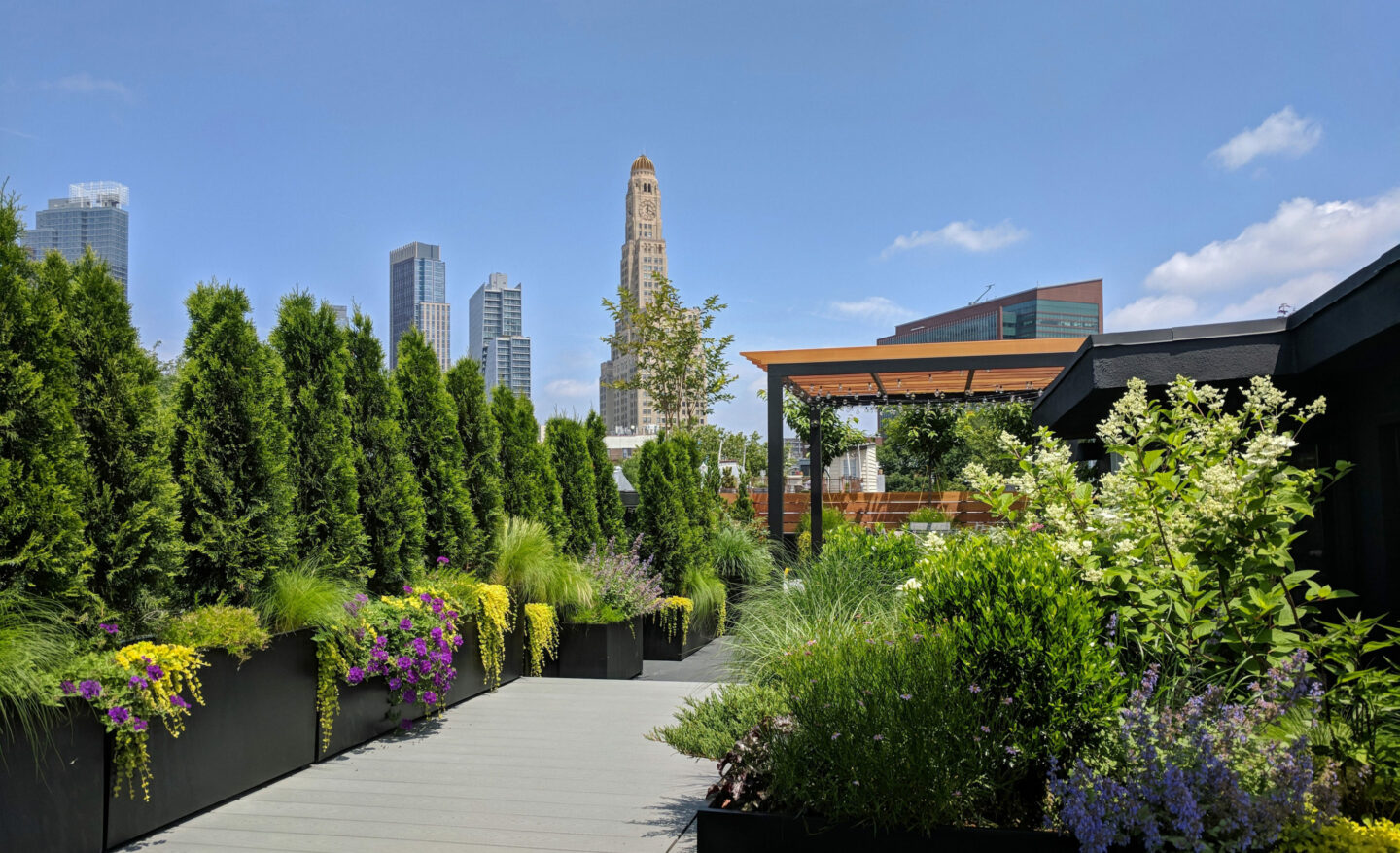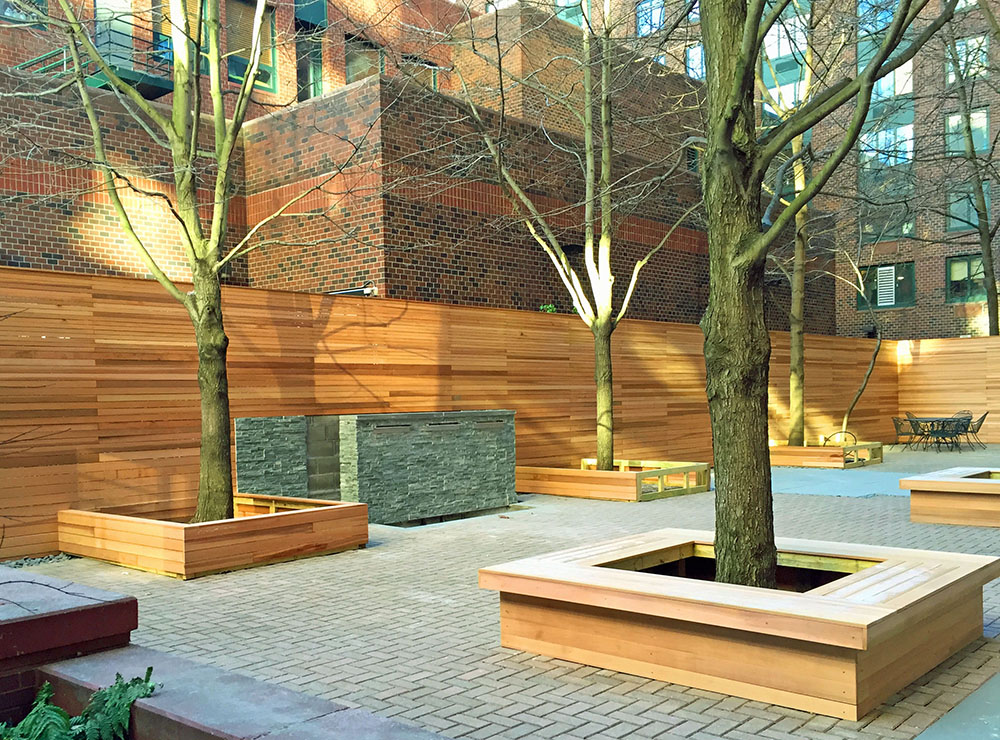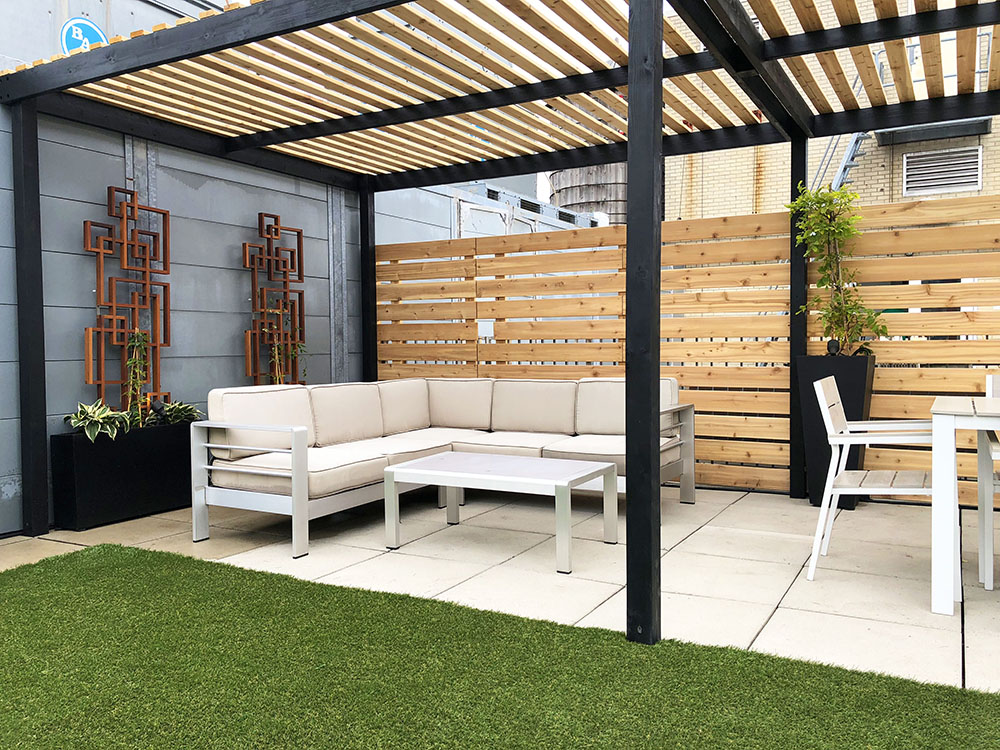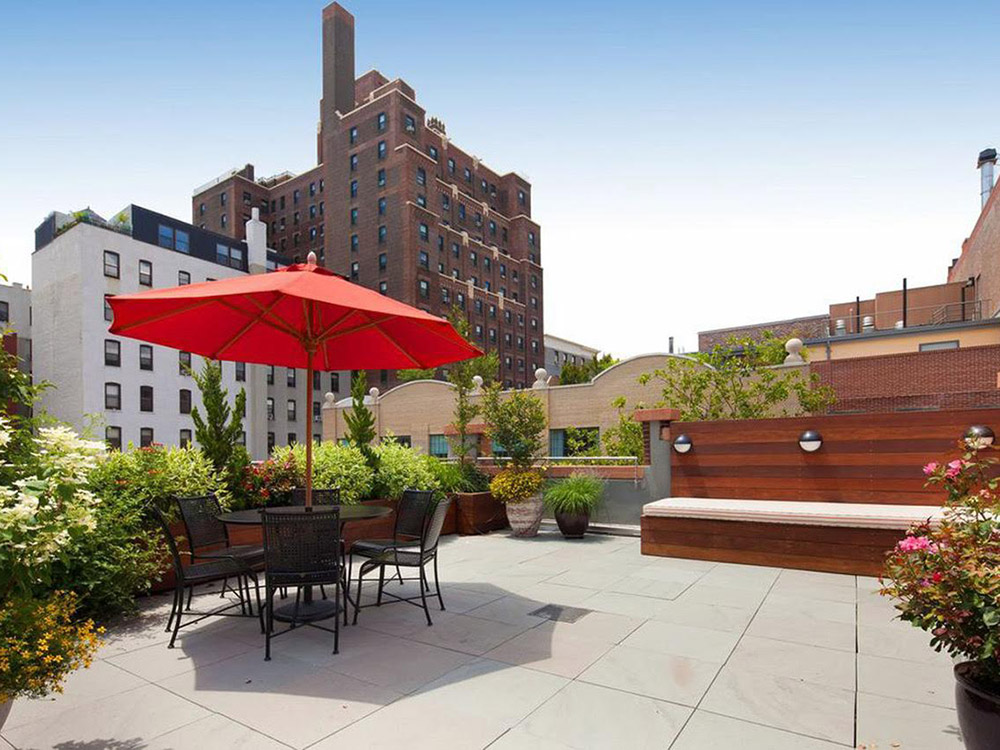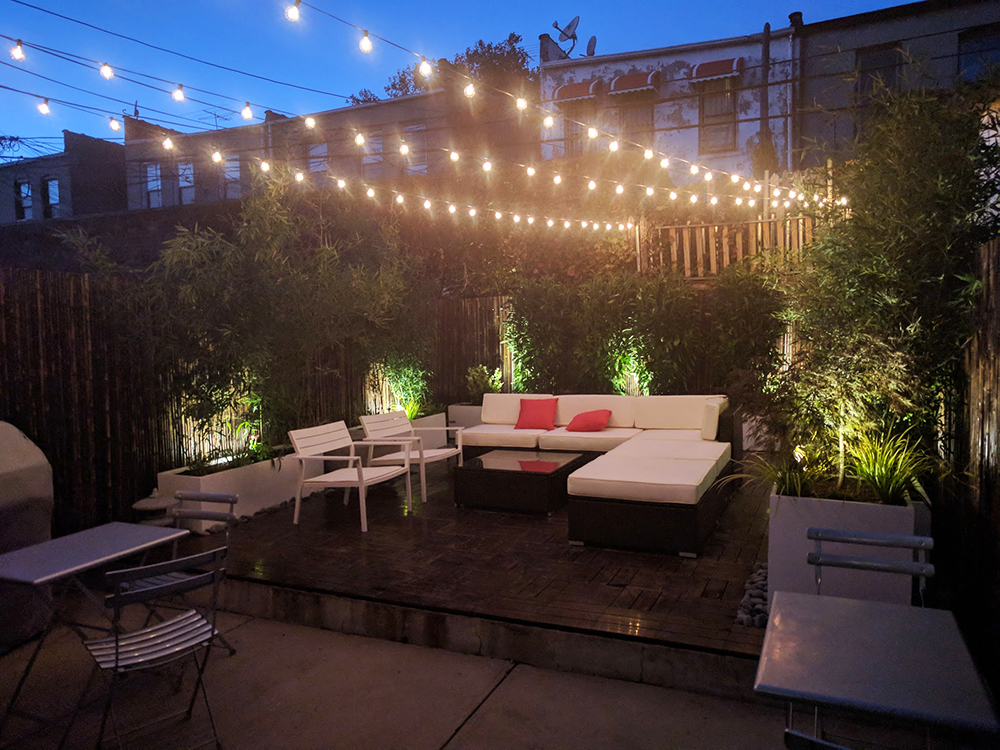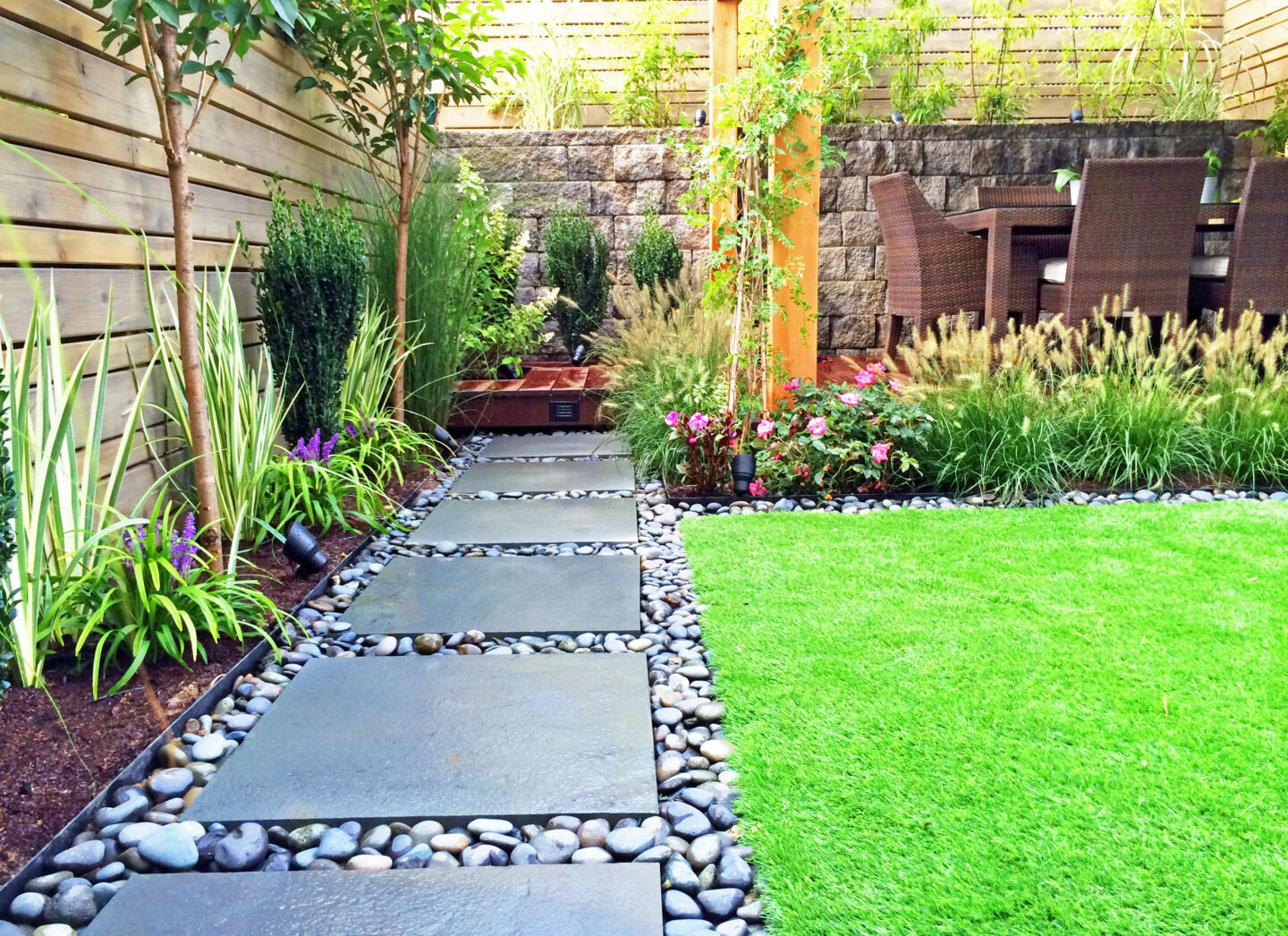

A pergola is one of the best things you can add to a New York rooftop or terrace. It turns an open, sun-baked roof into an outdoor room: a shady place for morning coffee, a frame for string lights and climbing vines, and a little privacy from the building next door. It’s also one of the most common things clients ask me about, especially when they’ve just bought an apartment with roof rights and are dreaming about next summer.
Building a pergola on a roof in Manhattan or Brooklyn is a different project from building one in a backyard, though. Here’s what I walk every client through before we draw a single beam.
Wind Is the First Design Question
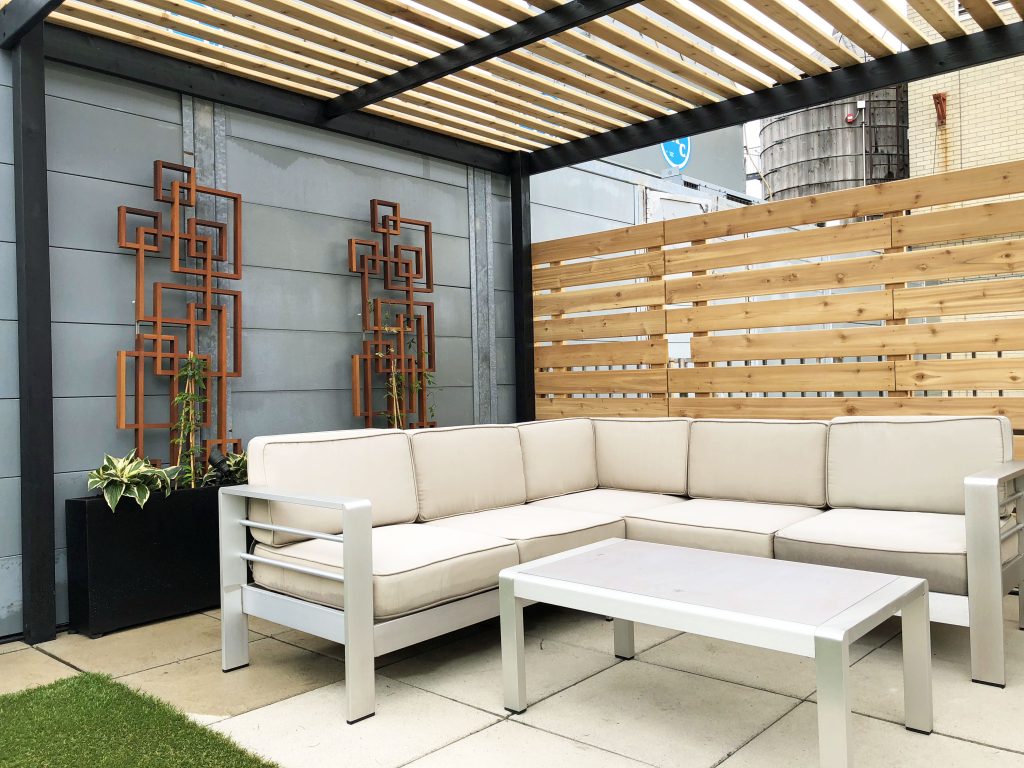
Ten or twenty stories up, wind is constant, and it gusts hard between buildings. A pergola that would be fine in a Westchester backyard can rack, loosen or lift on a Midtown roof. That affects almost every choice we make:
- An open roof works better than a solid one. Slats or louvers let wind pass through. A solid roof or a fixed fabric canopy acts like a sail.
- Canopies should retract. If you want fabric shade, choose a retractable system you can pull in before a storm, and get in the habit of doing it.
- Connections matter more than size. Heavier posts don’t help much if the base isn’t secured properly. The hardware and how it’s anchored are where the engineering goes.
How a Pergola Attaches to a Roof
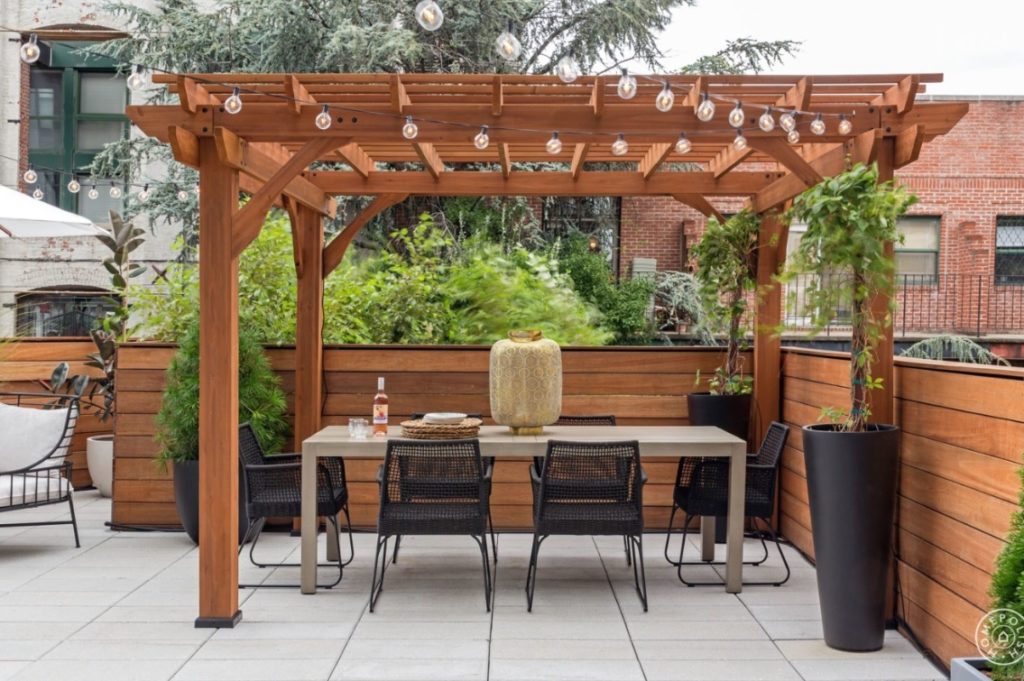
On a roof you can’t just dig a footing. There are generally two ways to hold a pergola down, and the right one depends on your building.
- Anchored to the structure. The posts are fastened through the roof deck into the building’s framing or steel. This is the most secure option, but every penetration has to be flashed and sealed by a roofer so it doesn’t leak, and it can affect your roof warranty.
- Ballasted or attached to planters. The pergola sits on weighted bases or is tied into large, heavy planters, with no holes in the roof. Many co-op and condo boards prefer this, but it adds weight, so the roof has to be able to carry it.
Either way, the roof’s load capacity comes first. Soil, planters, pavers, people and the pergola itself all add up. On most rooftop projects a structural engineer looks at the roof before we finalize the design, and I’d recommend that for any pergola beyond a very light freestanding one.
Permits, Landmarks and Your Building’s Rules
Rooftop structures in New York City are regulated, and the rules depend on the building, the zoning and the size of what you’re adding. In many cases a rooftop pergola needs plans from a licensed architect or engineer and a filing with the Department of Buildings. If your building is landmarked or in a historic district, which covers a lot of the West Village, Brooklyn Heights and Park Slope, the Landmarks Preservation Commission may need to approve how it looks from the street, too.
Don’t let that scare you off. It mostly means planning ahead and having the right professionals involved from the start. Skipping this step can lead to violations, problems when you sell, or being asked to take the pergola down.
Co-op and Condo Board Approval
If you live in a co-op or condo, your board (and often its architect or engineer) will want to review the plans before anything goes up. Most boards ask for:
- Drawings showing the pergola’s size, height and location
- How it will be attached, and confirmation that the roof membrane won’t be damaged
- Structural sign-off on the added weight
- Your contractor’s insurance certificates naming the building
- A plan for getting materials up to the roof, including elevator protection, hoisting and work hours
Board reviews can take a few weeks or a few months. That’s the main reason I tell clients to start planning in winter.
Choosing Materials That Last on a Roof

Rooftops get full sun, salt air near the rivers, freeze-thaw cycles and that wind again. The materials I use most:
- Western red cedar. Light, naturally rot-resistant and beautiful. It weathers to a soft silver, or it can be sealed to keep its warm color. It’s my go-to for a garden feel.
- Ipe and other hardwoods. Very dense and long-lasting, and a good match if your deck is already ipe. They’re heavier, so the roof load has to allow for them.
- Powder-coated aluminum. Lightweight, low-maintenance and modern-looking. It’s a good choice when weight is tight or you’d rather not re-stain wood every few years.
- Steel. For slim, architectural profiles and long spans. It needs a good protective finish.
Whatever the material, use stainless or hot-dipped galvanized hardware. Cheap fasteners are usually the first thing to fail on a roof.
Shade, Plants and Lighting

A pergola really comes to life once it’s planted. On a roof, the vines grow in containers, so I choose tough plants that handle wind and sun. Climbing hydrangea and akebia do well, and wisteria can work in a large enough planter with regular pruning. Planters along the base also soften the posts and can double as ballast.
This is also the moment to plan lighting and power. Running wiring for string lights, sconces or a ceiling fan while the pergola is being built is far easier than adding it later. If you have drip irrigation for your planters, we can run lines up the posts to water the vines automatically.
When to Start Planning Your Rooftop Pergola
If you want to sit under your pergola by Memorial Day, now is the time to start. A typical timeline looks like this:
- November – January: design, measurements and a structural review of the roof.
- January – March: board submission, permits if needed, and material orders.
- April – May: fabrication and installation, then planting once the weather warms up.
Spring is the busiest time of year for rooftop work in New York, so the clients who plan over the winter are the ones who get the earliest installation dates.
Thinking About a Pergola for Your Rooftop or Terrace?
I’ve designed and built pergolas on rooftops, terraces and backyards across Manhattan, Brooklyn and Queens, from a Harlem rooftop garden to a contemporary cedar pergola and a Brooklyn townhouse backyard. I’ll help you work out what your roof and building allow, and design something that holds up to the wind and looks beautiful for years. Learn more about our pergola design and installation, or request a consultation to get started.